Invitation to Witness
In response to a world unravelling under systems of domination — from Los Angeles to Gaza, from legal erasure to visual propaganda — I present a new photographic series: A Nod to the Metamorphosis Through Light.
This work emerges from deep political distress and a desire to confront a visual legacy that has shaped and scarred our understanding of the human face.
Below is the critical context in which this series was conceived.
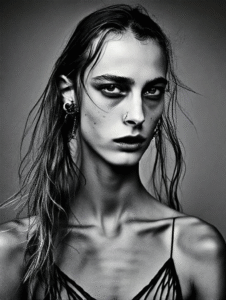
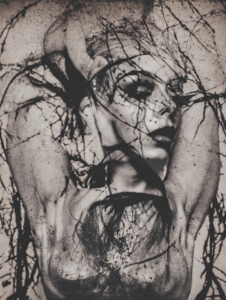
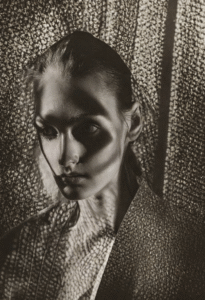
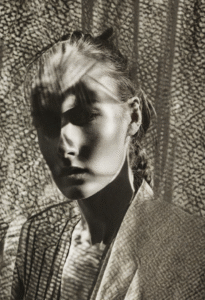
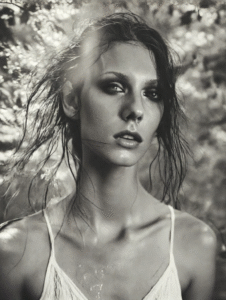
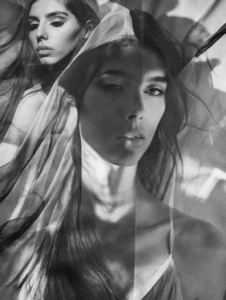
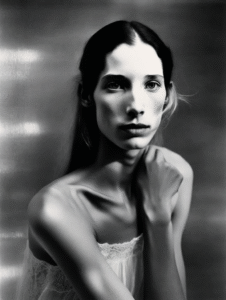
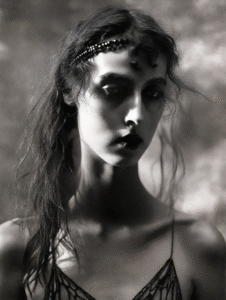
The images, which follow, speak in the language of light, shadow, and rupture.
In a world fractured by systemic racism, the global resurgence of the far right, and a deepening hostility toward the Other, I turned my lens toward what demands visibility.
I do not document from a place of distance — I respond, as an artist compelled by conscience, anger, and mourning.
The brutal crackdown in Los Angeles on June 9, 2025, where Trump attempted to invoke the Posse Comitatus Act of 1878 in defiance of Congress, marked a constitutional rupture. That law strictly prohibits military forces from performing domestic law enforcement, which was never meant for civil uprisings.
The California National Guard, trained for forest fires, not for protest, became the clumsy face of a dangerous political theater.
And while sanctuary cities like San Francisco and Chicago now face funding cuts for protecting migrants, Trump’s apocalyptic promise of mass deportation remains legally impotent.
The Fourteenth Amendment protects birthright citizenship.
But the damage is psychological. It is visual. It is racialized fear in broad daylight.
This collapse of human rights on U.S. soil finds a grim mirror in the actions of Netanyahu’s regime in Israel, where the erasure of Palestinian presence — through home demolitions, cultural silencing, and the routine brutalization of Muslim lives — has become statecraft.
These converging horrors led me to re-examine the legacy of Helmar Lerski, a photographer long heralded for his formal innovations but rarely interrogated for the ideology embedded in his gaze.
Lerski’s celebrated project, “Metamorphosis Through Light,” uses exaggerated lighting to sculpt the human face into abstraction.
While praised as an exploration of identity, Lerski’s portraits do not humanize — they decontextualize.
Faces are turned into theatrical masks, their individuality erased in favor of typology.
His work, often commissioned by Zionist institutions in the 1930s, was part of a larger propaganda machinery that promoted a radiant, noble Jewish archetype while rendering the Arab body — when it appears at all — as coarse, obscured, and othered.
Though he claimed to elevate universal humanity, Lerski’s actual practice reveals a nationalist bias — a hierarchy of beauty, of light, of visibility. He did not portray Arabs and Jews on equal footing.
He constructed a myth of the Promised Land through the manipulation of face and shadow, casting himself as its central model. After 1948, he distanced himself from the project, but the archive remains — and so does the harm.
My photographic series, “A Nod to the Metamorphosis through Light,” emerges as both homage and rupture. It reclaims the sculptural power of light not to dominate the subject, but to listen to her. These images are not about form.
They are about survival. Each face — sharp, emaciated, defiant — carries the residue of trauma.
The reflector sheets I use bend and fracture the light, creating a visual dissonance that resists aesthetic assimilation.
These women are not muses. They are sentinels.Where Lerski sought archetypes, I seek hauntings.
Where he erased the gaze, I insist upon it.
I illuminate what he tried to mask: the irreducible humanity of the face, especially when it trembles under the weight of history.
This work is not only a critique of a dead master.
It is a declaration that no photograph is ever innocent.
It is time we ask: Who gets to be visible? Who is made luminous? And at what cost?
These photographs are not meant to be admired. They are meant to be faced.