The photographic image is often perceived as a coherent and stable surface. Yet this apparent unity conceals internal tensions linked to the very conditions of its production.
In Alice Odilon’s research, the image is approached as a field of forces where perception, construction, and interpretation intersect. Moments of fracture reveal the invisible mechanisms that organize representation.
The texts gathered in this axis examine the forms of rupture that appear within the image: shifts, fragmentations, or perceptual ambiguities.
These fractures open a critical space in which the image ceases to be a simple visual object and becomes a site for analyzing the structures of the visible.
Despair: A Weapon Against Neutrality
21 December 2025
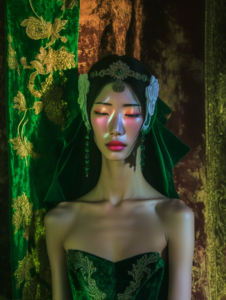
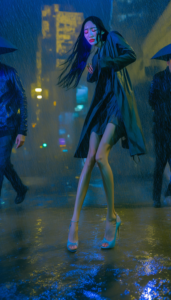
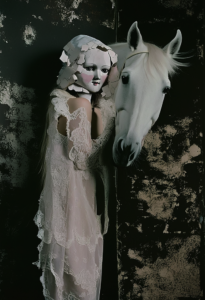
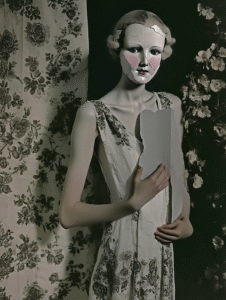
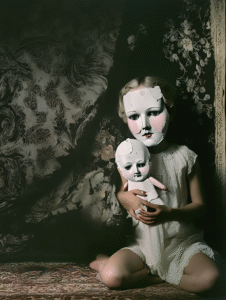
This series confronts the sanitized, neutralized art world by weaponizing despair — portraying the rawness of human experience as a critique of indifference. It interrogates complicity, commercialism, and the erasure of trauma in contemporary visual culture. The series is a manifesto: the viewer cannot remain neutral.
Despair fractures identity. These works confront the viewer with vulnerability as resistance, revealing what the art world often prefers to erase: rupture, decay, and the unfiltered weight of memory.
Fracture is the gaze interrupted; Erosion is the residue of what is left behind when neutrality fails. The body, the surface, the very light — all carry testimony.
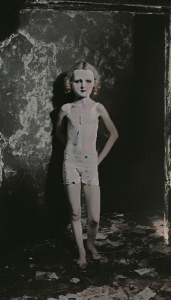
In this new series, I advance my long-term investigation into the fractures of selfhood by introducing a masked figure whose porcelain stillness becomes a site of resistance.
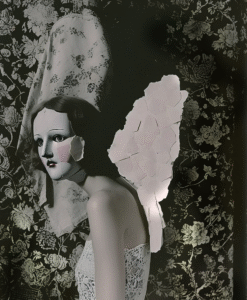
The mask—rigid, fragile, and deliberately unalive—interrupts the Western obsession with the expressive face.
It rejects the algorithmic hunger for legible identity, for neatly categorized emotions, for the relentless circulation of “selves” demanded by contemporary platforms.
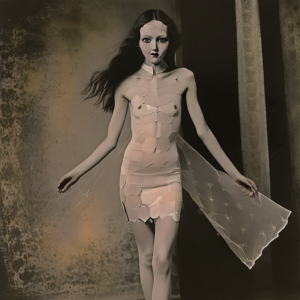
Drawing on the critical legacy of Hans Bellmer’s deconstructed dolls and Annette Messager’s strategies of disguise, I position the mask not as concealment but as refusal.
These figures do not “perform” for the viewer. They withhold. They fracture.
They confront the violence of a culture that has replaced empathy with replication, individuality with templated personas, and intimacy with the cold efficiency of social metrics.
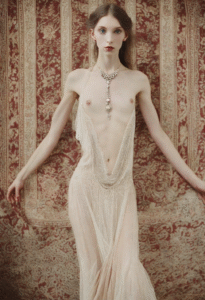
My research on identity, trauma, anorexia, and the politics of the gaze resonates throughout the work: the bodies, elongated or rigid, stand at the threshold between vulnerability and effacement.
They recall how contemporary image economies clone faces, behaviours, and desires, producing a world where sameness is rewarded and complexity punished. Here, the mask becomes a counter-gesture—a shield against the algorithmic demand to be readable, desirable, “engageable.”
My imagery points toward a post-human condition in which the body becomes a contested territory.
The floral backdrops, torn paper textures, and staged ruins evoke the collapse of domesticity and the dissolution of memory.
These scenes echo a society that has normalized emotional detachment, where materialism functions as an anesthetic and empathy becomes the rarest commodity.
What emerges is an uncompromising visual language: subversive, tender, and fiercely intelligent. I refuse the sentimental.
I offer instead a radical quietness—an opaque identity that society cannot decode, commodify, or consume.
The work insists on the right to opacity, to complexity, to being untranslatable in a culture addicted to likeness.